-

If you want to showcase your Microsoft Fabric prowess, DP-600 is the certification you are looking for. With a syllabus covering data analytics, data engineering, platform management and enterprise development best practices, it is indeed a test worthy of Analytics Engineers. Personally, I felt this was the hardest Microsoft Exam I’ve taken to date, due…
-

Introduction Real Time Analytics in Microsoft Fabric is flying a little under the radar, which is a shame, because the benefits are huge. Especially, if you start putting real time data into the hands of the people who need to react to it. And especially, especially if you do so at the right time. Introducing:…
-

Introduction “I want the data in real time” – is a sentence heard once too many by Data Analysts. In reality, real time has many different definitions depending on the stakeholder. To some it means that data is updated once an hour. To some it just means updated data ‘when I get in in the…
-
Introduction While Microsoft Fabric promises a collaborative workspace for Data Analysts, Engineers and Scientists alike, the person with the most to gain, and the least to lose, from the data mesh-like architectural patterns in Fabric is the Data Analyst. Do you, as a Data Analyst, recognize any of the following challenges? Then Microsoft Fabric might…
-

Introduction While Microsoft Fabric promises a collaborative workspace for Data Analysts, Engineers and Scientists alike, the person with the most to gain, and the least to lose, from the data mesh-like architectural patterns in Fabric is the Data Analyst. Do you, as a Data Analyst, recognize any of the following challenges? Then Microsoft Fabric might…
-
Introduction While Microsoft Fabric promises a collaborative workspace for Data Analysts, Engineers and Scientists alike, the person with the most to gain, and the least to lose, from the data mesh-like architectural patterns in Fabric is the Data Analyst. Do you, as a Data Analyst, recognize any of the following challenges? Then Microsoft Fabric might…
-
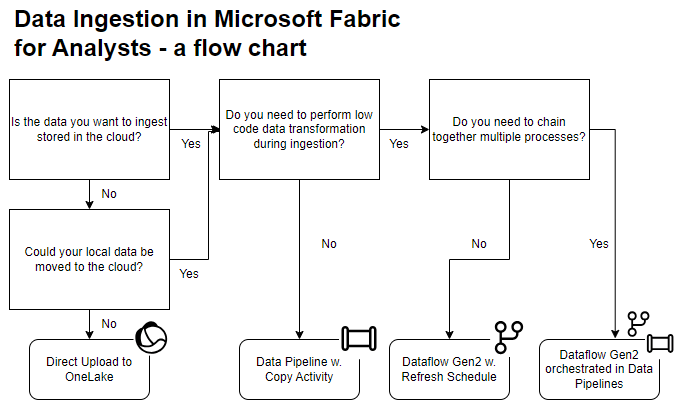
Introduction While Microsoft Fabric promises a collaborative workspace for Data Analysts, Engineers and Scientists alike, the person with the most to gain, and the least to lose, from the data mesh-like architectural patterns in Fabric is the Data Analyst. Do you, as a Data Analyst, recognize any of the following challenges? Then Microsoft Fabric might…
-
Introduction RLS in Microsoft Fabric is a convoluted topic which at the time of writing, is not very clearly spelled out for users. Most documentation refers to setting up RLS on Data Warehouses or Data Lakehouses by applying permissions directly on the tables: Row-level security in Fabric data warehousing – Microsoft Fabric | Microsoft Learn…
-
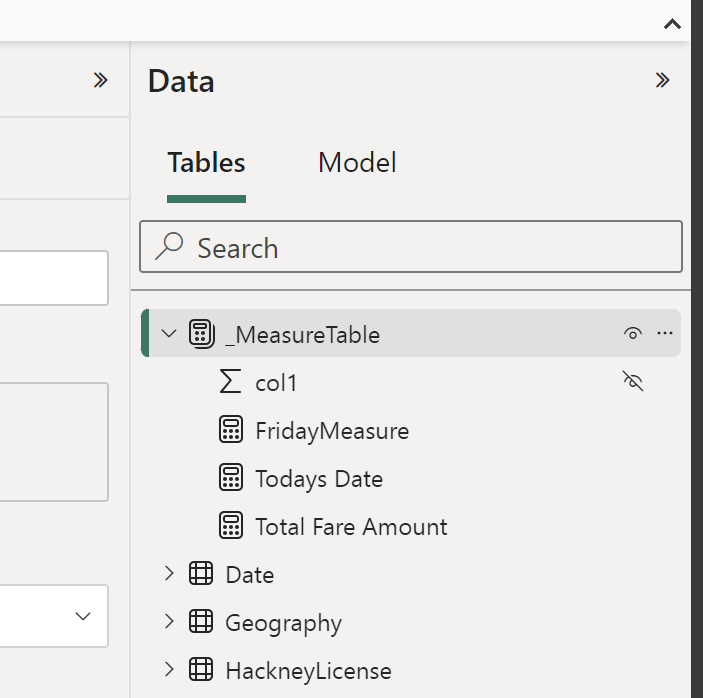
Creating Measure Tables in Microsoft Fabric Semantic Models Measure Tables have long been used to store Measures in Power BI Semantic Models. However, in Microsoft Fabric, where most of the data modeling takes place in the browser, at least if we wish to reap the benefits of the DirectLake storage mode, the process of creating…
-
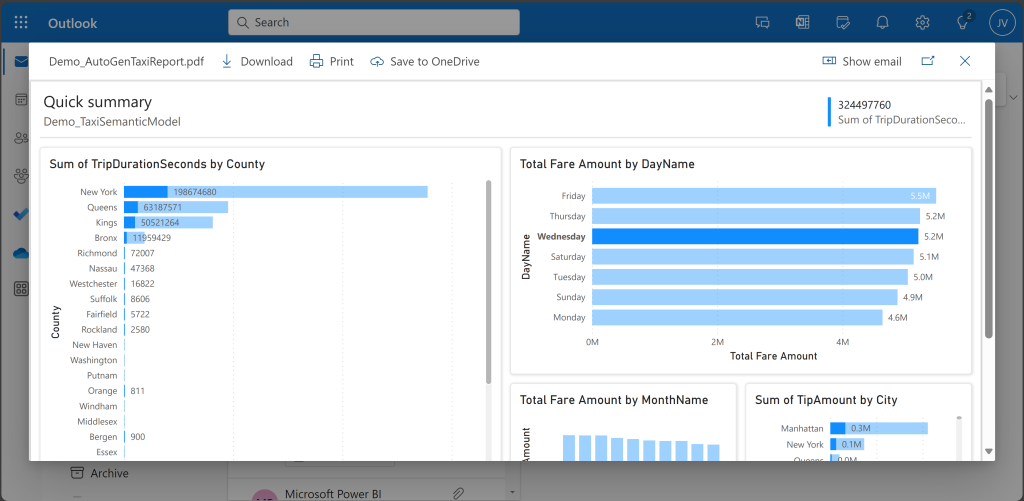
Introduction Dynamic Subscriptions for Power BI were recently released as a Preview Feature in the Power BI Service, allowing for distribution of personalized per recipient reports. The feature is explained in some depth in the official Documentation & Power BI Blog, but when playing around with the feature I came across both a few easily…

Hi, I’m Jon. Welcome to my blog.
I write about Microsoft Fabric, Power BI, Power Apps & Power Automate, and speak at conferences about data, business intelligence and data driven decision making.
Subscribe below to avoid missing out on the latest guides and articles!