Power BI
-

Introduction Microsoft Fabric is top of mind everywhere, and its promises for improving the analytic capabilities of Power BI users are huge. However, integrations and compatibility between Fabric and the wider Power Platform (e.g. Dataverse, Power Apps) is not seeing the focus it warrants. For starters: How can I leverage data currently stored in Dataverse,…
-

Introduction A Fabric feature which has flown a little under the radar (and which is still in Preview as of May 2024), is the ability to sync data from imported Semantic Models back to OneLake: Learn about Microsoft OneLake Delta table integration in Power BI and Microsoft Fabric – Power BI | Microsoft Learn The…
-

Introduction In March, I wrote about How to setup RLS in Microsoft Fabric / Power BI without breaking DirectLake functionality – Downhill Data (downhill-data.com) Back then, RLS was not possible to edit through the Web Authoring experience of Semantic Models in Fabric. Instead, you had to go the roundabout way of using Tabular Edit to…
-

Introduction Real Time Analytics in Microsoft Fabric is flying a little under the radar, which is a shame, because the benefits are huge. Especially, if you start putting real time data into the hands of the people who need to react to it. And especially, especially if you do so at the right time. Introducing:…
-

Introduction “I want the data in real time” – is a sentence heard once too many by Data Analysts. In reality, real time has many different definitions depending on the stakeholder. To some it means that data is updated once an hour. To some it just means updated data ‘when I get in in the…
-

Introduction While Microsoft Fabric promises a collaborative workspace for Data Analysts, Engineers and Scientists alike, the person with the most to gain, and the least to lose, from the data mesh-like architectural patterns in Fabric is the Data Analyst. Do you, as a Data Analyst, recognize any of the following challenges? Then Microsoft Fabric might…
-

Introduction While Microsoft Fabric promises a collaborative workspace for Data Analysts, Engineers and Scientists alike, the person with the most to gain, and the least to lose, from the data mesh-like architectural patterns in Fabric is the Data Analyst. Do you, as a Data Analyst, recognize any of the following challenges? Then Microsoft Fabric might…
-
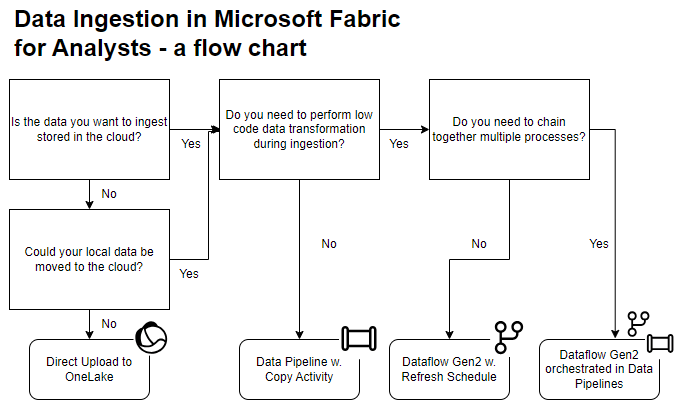
Introduction While Microsoft Fabric promises a collaborative workspace for Data Analysts, Engineers and Scientists alike, the person with the most to gain, and the least to lose, from the data mesh-like architectural patterns in Fabric is the Data Analyst. Do you, as a Data Analyst, recognize any of the following challenges? Then Microsoft Fabric might…
-
Introduction RLS in Microsoft Fabric is a convoluted topic which at the time of writing, is not very clearly spelled out for users. Most documentation refers to setting up RLS on Data Warehouses or Data Lakehouses by applying permissions directly on the tables: Row-level security in Fabric data warehousing – Microsoft Fabric | Microsoft Learn…
-
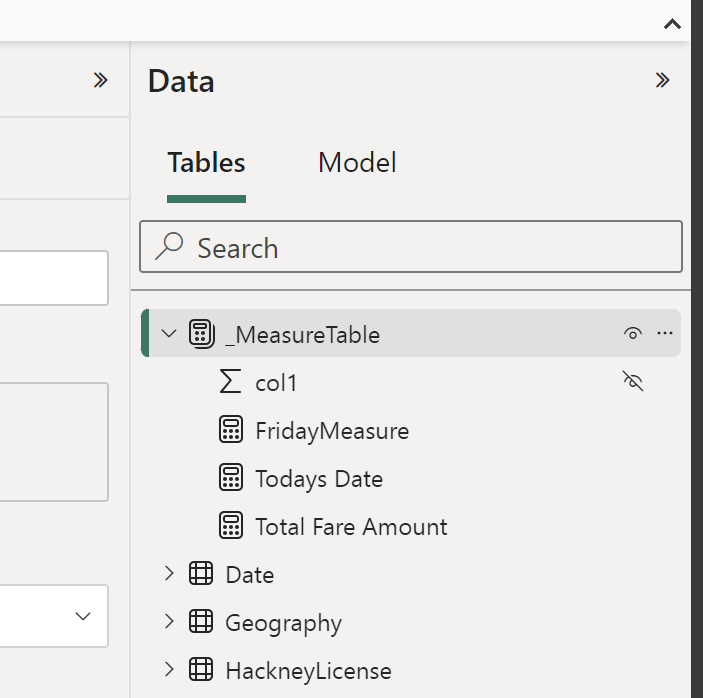
Creating Measure Tables in Microsoft Fabric Semantic Models Measure Tables have long been used to store Measures in Power BI Semantic Models. However, in Microsoft Fabric, where most of the data modeling takes place in the browser, at least if we wish to reap the benefits of the DirectLake storage mode, the process of creating…
 Downhill Data